In-Depth Reading
Complete Homeowner Field Guides & Local News
Comprehensive technical analysis, municipal code updates, and weather advisories from our veteran Clark County roofing team.
Pillar Guide 01 • Roofing Service
2026 Roof Replacement Cost in Vancouver WA: Complete Material, Decking & Labor Price Guide
Planning a roof replacement in Clark County requires understanding local material costs, tear-off logistics, and building code mandates. In 2026, the verified benchmark for a complete residential roof replacement in Vancouver, WA averages $15,000 to $28,000 for a standard 2,000 to 2,500 square foot home. On a per-square-foot basis, architectural laminate shingles range from $7.50 to $9.50 installed, while 24-gauge standing seam metal panels range from $14 to $18 installed.
Line-Item Cost Breakdown for Clark County Homes
- Complete Tear-Off & Disposal ($1.50 to $2.25 per sq ft): Stripping old shingles down to bare plywood sheathing and hauling debris to local Clark County transfer stations. Homes with two existing layers incur higher disposal fees due to landfill weight regulations.
- Plywood Decking Inspection & Repair ($85 to $120 per sheet): Water intrusion often causes localized dry rot in CDX plywood or OSB sheathing. Our team replaces damaged sheets with exterior-grade plywood nailed to structural framing.
- Underlayment & Ice Barrier Protection ($0.75 to $1.25 per sq ft): Heavy-duty synthetic underlayment paired with self-adhering ice and water shield along eaves, valleys, and wall flashings to resist Pacific Northwest moisture.
- Architectural Shingle Installation ($4.50 to $6.00 per sq ft): Premium dimensional shingles from Malarkey or GAF fastened with an exacting 6-nail high-wind pattern and matching ridge caps.
- Continuous Ridge & Soffit Ventilation ($600 to $1,400 total): Balanced intake and exhaust airflow to protect attic temperature and preserve manufacturer warranties.
Key Takeaway & Cost Advice:
Always demand a written line-item estimate that includes permits, disposal fees, and magnetic cleanup. Satellite-only bids often hide surprise change orders for rotten decking or ventilation retrofits once work begins.
Pillar Guide 02 • Local Vancouver News
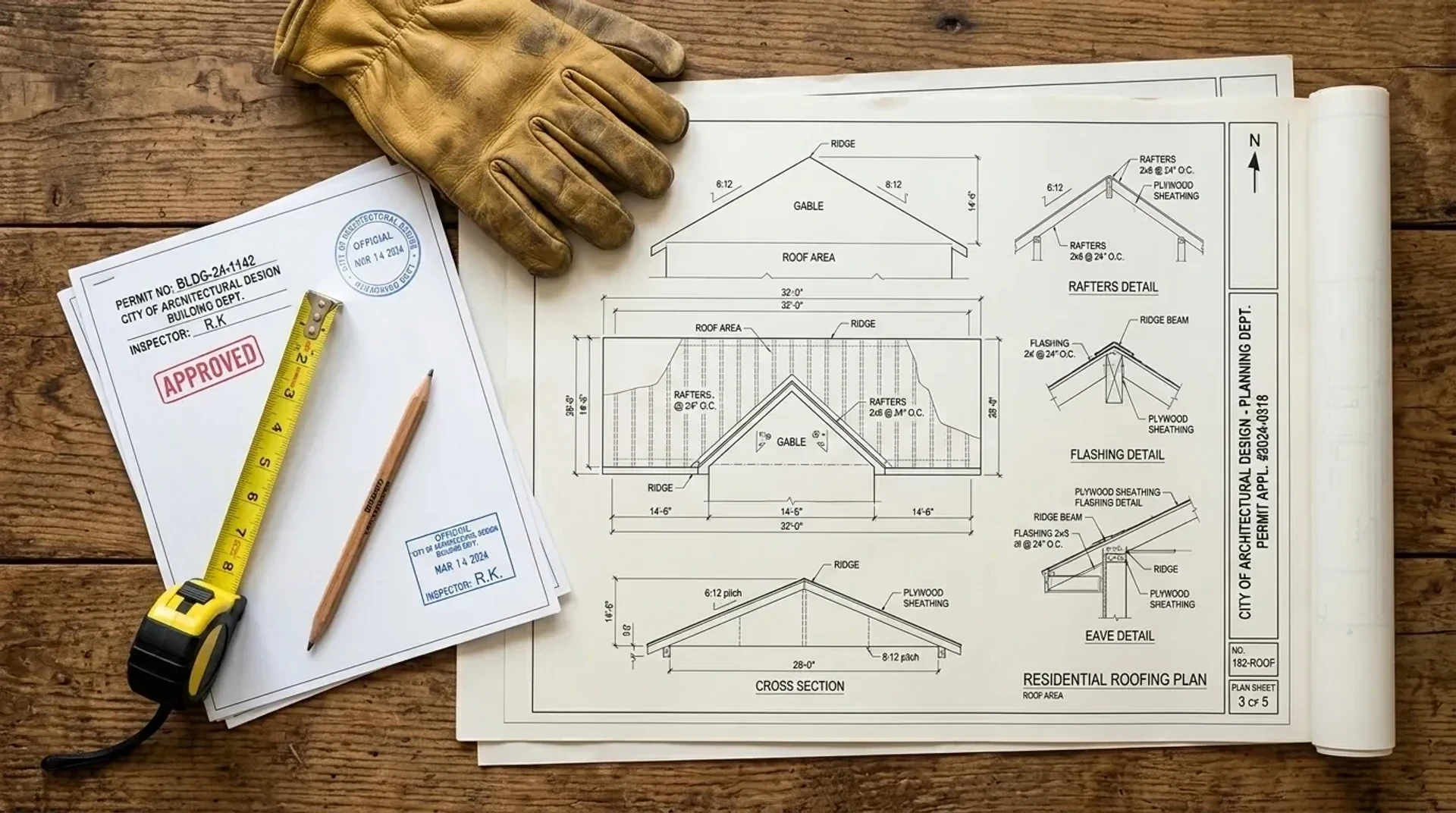
City of Vancouver 2026 Building Code Update: What Clark County Homeowners Must Know About New Residential Roofing Standards
The City of Vancouver Community Development Department and Clark County Building Safety division have issued updated enforcement guidelines for residential roofing projects under the 2026 Washington State Residential Code (WSRC) and Washington State Energy Code (WSEC). These updates affect both full reroofing replacements and substantial roof structural modifications throughout Vancouver, Camas, Washougal, Ridgefield, and Battle Ground.
Key 2026 Code Enforcement Requirements:
- Mandatory Balanced Attic Ventilation Ratios: The 2026 building code mandates that all reroofing projects maintain a minimum 1:150 net free ventilating area ratio, or 1:300 where continuous ridge and balanced soffit vents are installed. Contractors must certify that soffit intake is unobstructed by existing attic insulation.
- Self-Adhering Ice Barrier Extension on Low Slopes: For roof slopes between 2:12 and 4:12, building inspectors now strictly require self-adhering polymer modified bitumen sheets extending from the lowest edge of the roof to at least 24 inches inside the interior wall line.
- Strict Prohibition on Three-Layer Roofing: Washington State code permits a maximum of two layers of asphalt shingles. If your home already has two layers, a complete tear-off down to structural sheathing is legally required before new shingles are applied.
- Permit Trigger and Inspection Fees ($150 to $450): Complete residential reroofing projects within the City of Vancouver limits require an active building permit. Apex Roofers handles all permit submissions, site plan documentation, and final city inspector scheduling as part of our turnkey service.
Homeowner Legal & Resale Warning:
Unpermitted roof replacements create severe disclosure liabilities during home resale in Clark County and can give insurance providers legal grounds to deny water damage claims. Always verify that your roofer pulls an official City of Vancouver or Clark County building permit.
Pillar Guide 03 • Local Vancouver Weather Alert
Columbia River Gorge High-Wind Warning: How Vancouver & Camas Homeowners Are Preparing Roofs for 65 MPH Gusts
The National Weather Service (NWS) Portland/Vancouver office frequently issues High Wind Warnings and Wind Advisories as powerful east winds funnel through the Columbia River Gorge. As cold air pours through the natural gap in the Cascade Range, wind speeds accelerate dramatically, creating localized gusts of 50 to 65 MPH that strike Camas, Washougal, Prune Hill, Cascade Park, and East Vancouver with intense uplift pressure.
Why Gorge Wind Shears Cause Severe Roof Damage
Standard architectural shingles installed with basic 4-nail patterns are only rated for 60 to 70 MPH winds. When continuous east winds buffet a roof, they break the manufacturer asphalt adhesive strip along the leading edge. Once unsealed, the shingles flap in the turbulence, crease along the top edge, and tear away entirely, exposing vulnerable synthetic underlayment to torrential rainfall.
5-Step Homeowner Pre-Storm Action Checklist:
- Inspect Overhanging Tree Canopies: Douglas fir and bigleaf maple limbs within 10 feet of your roof plane must be pruned. Heavy branches whipping in 60 MPH winds can puncture decking in seconds.
- Check Perimeter Rake Metal & Ridge Caps: The highest suction occurs along the windward eaves and ridge lines. Verify that ridge caps are firmly sealed.
- Clear Valleys and Gutters: Clogged downspouts cause storm water to back up under the eave shingles when wind-driven rain overwhelms drainage paths.
- Photograph Pre-Storm Condition: Having dated photos of your roof and property provides crucial proof for your insurance carrier if wind damage occurs.
- Save Our 24/7 Emergency Dispatch Number: Keep (360) 325-8254 saved on your phone for rapid 60-minute emergency tarping during active storm damage.
Insurance Documentation Rule:
Never discard blown-off shingles or torn ridge components before your insurance adjuster arrives. Retain them in your garage as physical proof of storm uplift force for your claim file.
Pillar Guide 04 • Roofing Service
Emergency Roof Leak Repair in Vancouver WA: 60-Minute Tarping Protocol & Storm Insurance Documentation
When severe Pacific Northwest rainstorms or fallen tree limbs compromise your roof, water intrusion accelerates quickly. In Clark County, where annual rainfall exceeds 42 inches, an unaddressed leak can ruin attic insulation, short out electrical circuits, and saturate drywall ceilings within hours. Here is the field-tested protocol our emergency response team follows across Vancouver, Camas, and Ridgefield.
Immediate Action in the First 60 Minutes:
1. Relieve Water Pressure on Ceilings: If you see a sagging ceiling bulge or water blister forming beneath the drywall paint, place a large 5-gallon bucket underneath and carefully puncture the center of the blister with a screwdriver. This allows water to drain into the bucket and prevents the entire drywall ceiling panel from collapsing under trapped weight.
2. Cut Power to Wet Fixtures: If water is dripping near recessed lights, ceiling fans, or wall outlets, immediately turn off the corresponding circuit breakers at your main panel to prevent electrical fires or shock hazards.
3. Why Professional 2x4 Batten Tarping Is Critical: Quick DIY blue tarps weighed down with bricks or sandbags almost always fail in high winds. The wind catches the tarp edges, sends bricks crashing into gutters or parked vehicles, and allows water to funnel underneath. Our crew uses industrial woven polyethylene tarps mechanically secured to structural rafters with 2x4 lumber nailer battens, creating a watertight envelope that withstands 60 MPH winds until permanent repairs can be completed.
4. Documenting Proof for Adjuster Approval: We take timestamped wide-angle and macro photos of exterior roof puncture points, broken decking, and interior water lines before temporary dry-in begins, giving your insurance company clear evidence to approve your storm damage claim.
24/7 Clark County Emergency Dispatch Line
60-Minute Rapid Response in Vancouver, Camas & Washougal
Call (360) 325-8254
Pillar Guide 05 • Roofing Service
Pacific Northwest Roof Moss Removal: Why Pressure Washing Voids Shingle Warranties and What Zinc Bio-Treatments Do Instead
Moss is a living moisture sponge on Pacific Northwest rooftops. While small green tufts might look harmless, moss rhizoids physically root into the ceramic granule coating of asphalt shingles. As colonies expand, they hold rainwater against the asphalt binder for weeks, preventing the roof from drying out even during brief sunny intervals. During winter freeze-thaw cycles, this trapped moisture expands, lifting shingle tabs and exposing decking to rot.
The Destructive Reality of High-Pressure Washing
The single most catastrophic mistake Clark County homeowners make is hiring a pressure-washing contractor or attempting DIY blast cleaning. Asphalt shingles rely on a tightly bonded layer of ceramic granules to reflect ultraviolet radiation and provide Class A fire resistance. A pressure washer operates between 2,000 and 4,000 PSI, which instantly strips away 5 to 10 years of protective mineral granules. Both Malarkey Roofing Products and GAF explicitly state in their warranty documentation that high-pressure washing voids your material warranty.
Our Gentle Low-Pressure Soft Wash Protocol
Instead of high pressure, professional roofing technicians use a gentle low-pressure soft wash system (under 60 PSI) applying EPA-approved biodegradable moss treatments. This specialized cleaning solution neutralizes moss spores and dissolves the root system at a cellular level without disturbing a single asphalt granule. Within days, the desiccated moss detaches naturally with rainfall.
Long-Term Protection: Zinc Strips vs Algae-Resistant Shingles
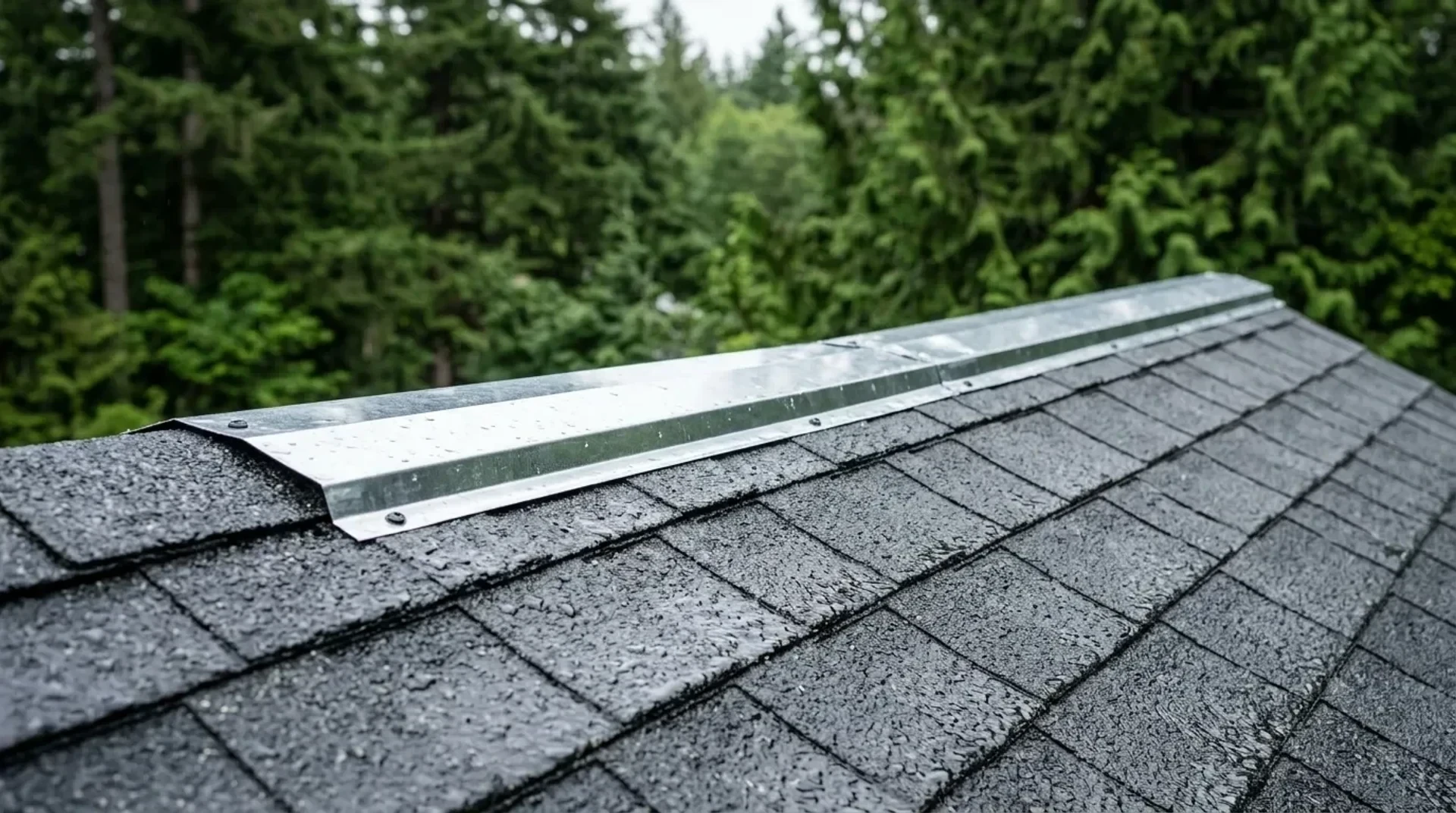
To prevent moss and algae from returning, we install 99.5% pure zinc carbonate strips along the ridge line. With each rainfall, microscopic zinc ions are released and washed down the roof plane, creating an inhospitable environment for moss and blue-green algae spores for 8 to 12 years.
If you are planning a full replacement, choosing shingles engineered for Pacific Northwest rain is essential. Malarkey Highlander NEX AR shingles incorporate Scotchgard Protector from 3M with copper granules and Flexor SBS rubberized asphalt, offering exceptional cold-weather flexibility. Meanwhile, GAF Timberline HDZ shingles feature StainGuard Plus algae protection with a 25-year manufacturer warranty. Both brands deliver superior performance when installed with proper ventilation.
Explore Our Professional Moss Removal Service →
Pillar Guide 06 • Roofing Service
Malarkey vs GAF Architectural Shingles: Pacific Northwest Durability, Wind Ratings & Warranty Comparison
Choosing between Malarkey Roofing Products and GAF Timberline HDZ is one of the most critical decisions Clark County homeowners face during a roof replacement. Both manufacturers produce high-performance architectural laminate shingles engineered for Pacific Northwest rainfall, but their core asphalt chemistry, wind warranties, and algae resistance technologies differ significantly.
1. Asphalt Technology: Polymer Modified vs Oxidized Asphalt
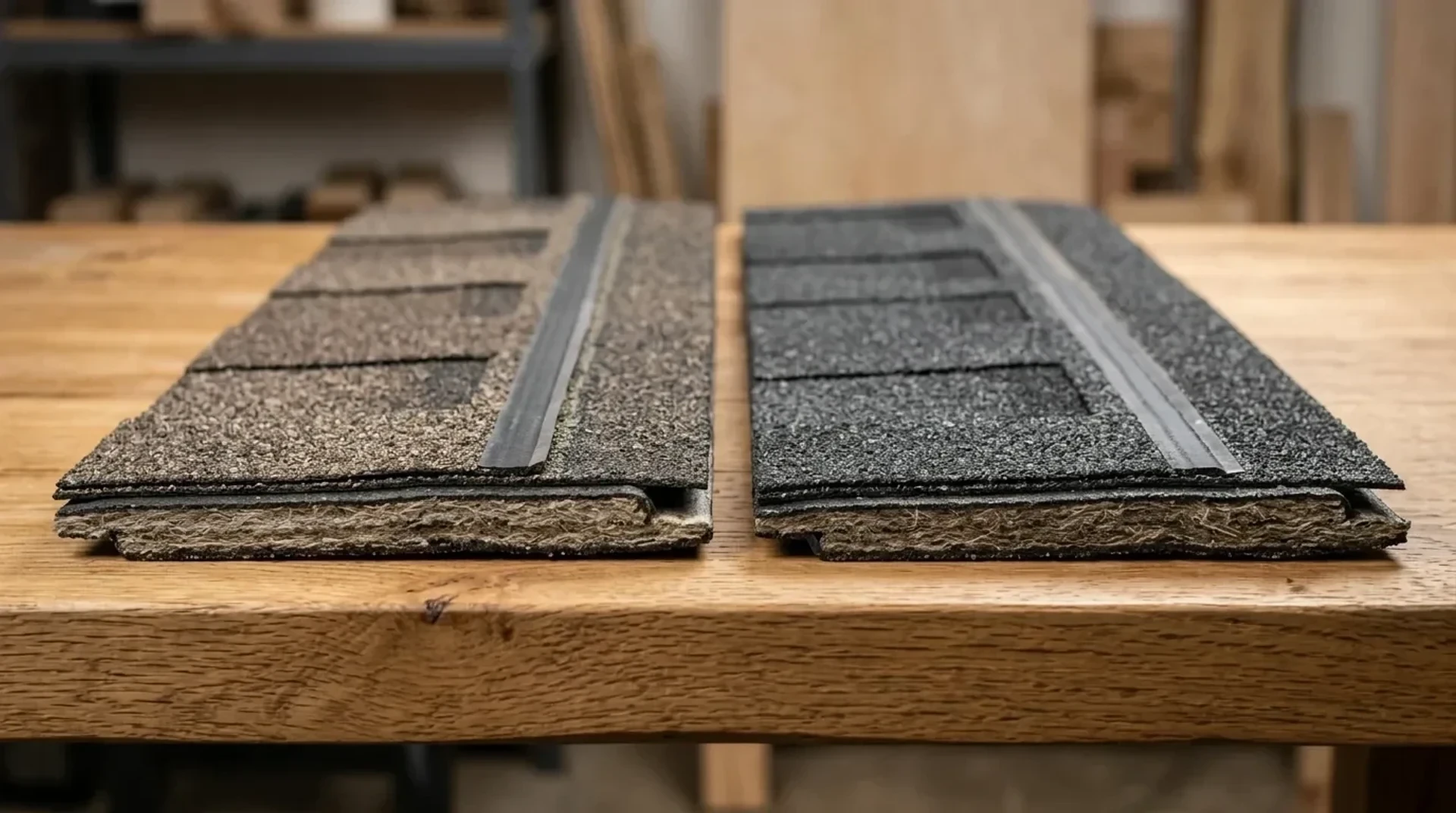
Malarkey Highlander NEX AR: Malarkey manufactures shingles using proprietary Flexor polymer modified asphalt combined with upcycled tire polymers and clean recycled plastics. This rubberized asphalt matrix provides superior cold-weather pliability, preventing brittle fracturing when installed during damp 40-degree Clark County winters. The rubberized granules also offer Class 3 or Class 4 impact resistance against falling tree branches.
GAF Timberline HDZ: GAF utilizes premium oxidized asphalt reinforced with a fiberglass mat core and their patented LayerLock technology. LayerLock mechanically fuses the common bonding zone between shingle laminates, creating a 99.9% nail-strike accuracy zone and an exceptionally strong inter-shingle bond.
2. Wind Resistance & Columbia Gorge Blow-Off Ratings
Both brands deliver exceptional wind ratings essential for Columbia River Gorge wind shears: GAF Timberline HDZ offers the WindProven infinite wind speed warranty when installed with four qualifying GAF accessories (ridge cap, starter strip, roof deck protection, and leak barrier). Malarkey Highlander NEX AR features an industry-standard 110 MPH wind warranty, upgradeable to 130 MPH with an enhanced 6-nail pattern and Malarkey starter shingles.
3. Algae Protection in Damp Clark County Weather
Pacific Northwest shade promotes blue-green algae (Gloeocapsa magma) that causes unsightly black streaking. Malarkey incorporates 3M Scotchgard Protector granules with a 20-year algae warranty, utilizing uniform copper ion distribution across the entire shingle plane. GAF features StainGuard Plus algae protection with proprietary time-release copper-containing capsules backed by a 25-year manufacturer warranty.
Master Craftsman Recommendation:
For homes heavily shaded by mature Douglas firs or located in damp tree belts like Battle Ground and Brush Prairie, Malarkey rubberized polymer shingles offer superior granule retention and cold-weather toughness. For open wind-exposed ridges in Camas and Prune Hill, GAF LayerLock technology provides unmatched blow-off security.
Explore Our Architectural Shingles Installation Service →

 Local Vancouver News