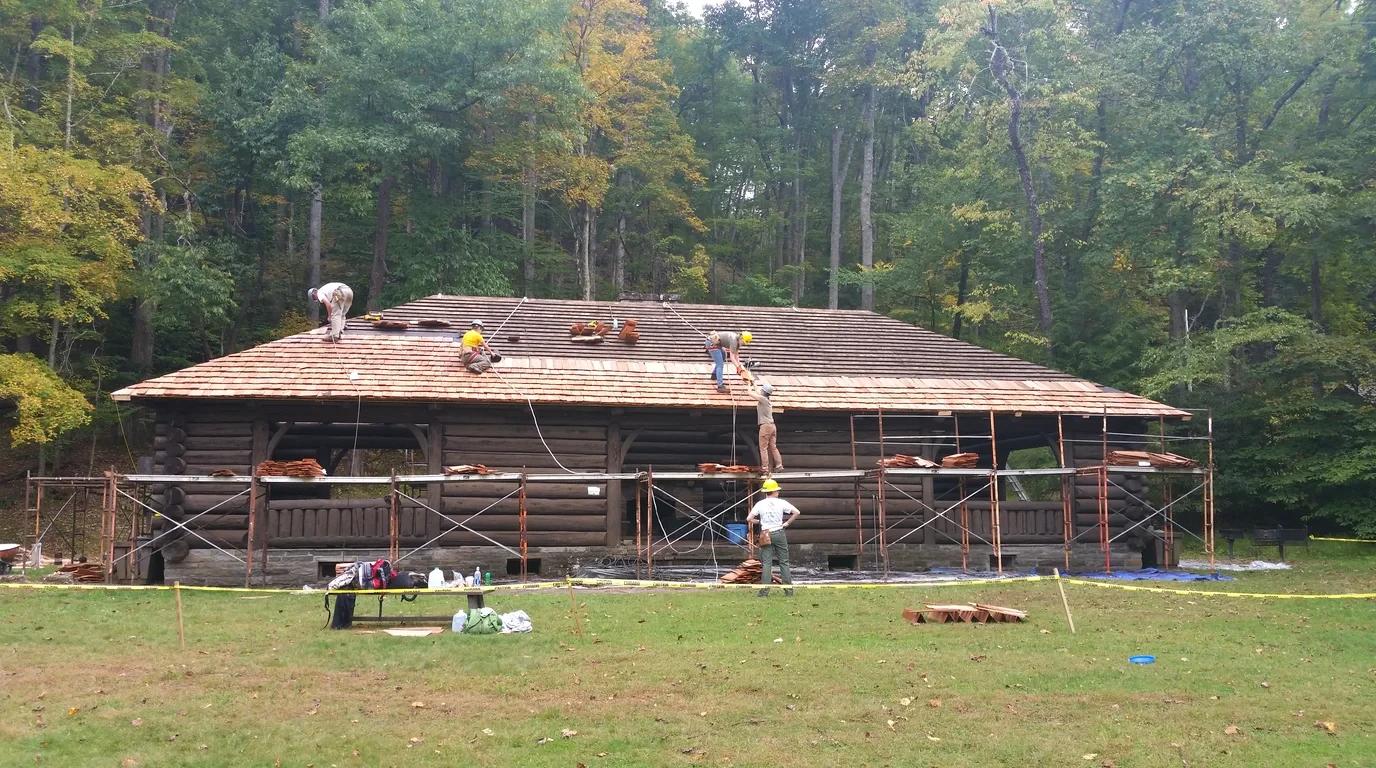
Hand-Split Cedar Shake Roofing in Vancouver WA
Traditional cedar shake installations, shake-to-shingle conversions, and specialized preservative treatments for distinguished Pacific Northwest homes. We install premium Certi-Split Western Red Cedar shakes with proper air gaps, and provide complete tear-offs to modern architectural shingles for homeowners seeking improved fire resistance and lower maintenance.
- Western Red Cedar Grade: 100% vertical grain heartwood (Certi-Split Blue Label) naturally resistant to rot, insects, and decay.
- Fire Defense Standards: Pressure-impregnated Class A and Class B fire-retardant treated options complying with Clark County wildland building codes.
- Shake-to-Composite Conversions: Complete tear-off solutions to high-definition architectural shingles for homeowners desiring zero maintenance.
What Is the Difference Between Cedar Shakes and Cedar Shingles?
Cedar shakes are hand-split with a textured, rugged face measuring 3/4-inch thick for dramatic shadow lines ($14 to $16/sq ft installed), whereas cedar shingles are machine-sawn smooth on both sides at 3/8 to 1/2-inch thick for tailored architectural uniformity ($12 to $14/sq ft installed). Both deliver 30 to 50 years of performance when maintained with regular preservative treatments.
Source and Official Standards: Certified in accordance with Washington State Department of Labor and Industries (L&I) contractor guidelines and Cedar Shake & Shingle Bureau (CSSB) specifications.
Many homeowners use the terms "shakes" and "shingles" interchangeably, but they are distinct products with different visual characteristics, installation methods, and price points. Understanding the difference helps you choose the product that best matches your home's architectural style and your budget.
Cedar shakes are split from the log rather than sawn, creating a rough, textured surface with natural irregularities that give each shake unique character. This hand-split face catches light and shadow differently across the roof surface, creating the dramatic, rustic appearance that most people picture when they think of a cedar roof. Heavy hand-split shakes are typically 3/4 inch thick and provide excellent dimensional depth and weather resistance.
Cedar shingles, by contrast, are machine-sawn on both sides to create a smooth, uniform surface. They produce a more refined, tailored appearance that suits Colonial, Cape Cod, and cottage-style architecture. Cedar shingles are thinner than shakes (typically 3/8 to 1/2 inch) and cost slightly less per square due to more efficient manufacturing and faster installation.
Both products are graded by the Cedar Shake and Shingle Bureau (CSSB). We install only Number 1 Grade (Blue Label) shakes and shingles, which are 100% heartwood from old growth or managed second growth western red cedar. Lower grades contain sapwood that degrades faster and provides less weather protection. The quality of cedar stock is the single most important factor in long-term performance across Vancouver, Washington properties.
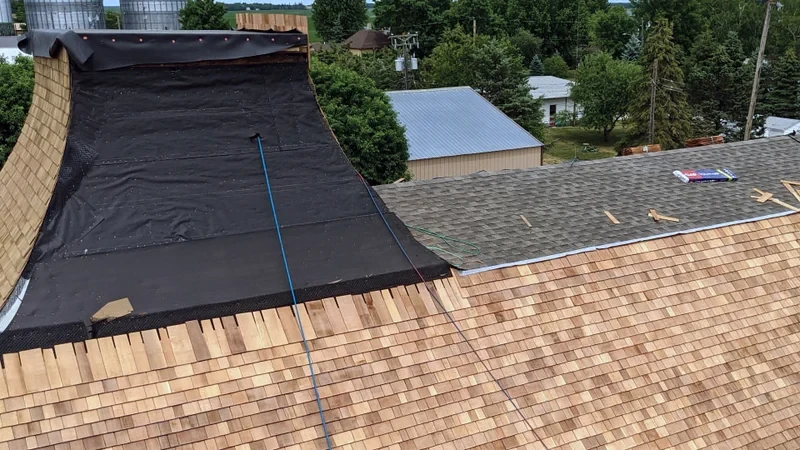
| Feature | Shakes | Shingles |
|---|---|---|
| Cut Method | Hand-split | Machine-sawn |
| Texture | Rough, rustic | Smooth, uniform |
| Thickness | 3/4 inch | 3/8 to 1/2 inch |
| Best Style | Craftsman, Lodge | Colonial, Cottage |
| Affordable Price | $14 - $16/sq ft | $12 - $14/sq ft |
| Lifespan | 35 - 50 years | 30 - 40 years |
| Underlayment | Interlayment required | Standard underlayment |
Affordable Cedar Pricing
How Does the Clark County Climate Affect Cedar Shake Roofs?
Western red cedar performs beautifully in our region, but the Pacific Northwest environment creates specific maintenance needs that homeowners must understand before investing in a cedar roof.
Clark County's 42 inches of annual rainfall, mild temperatures, and dense evergreen tree cover foster aggressive moss colonization and surface moisture retention on wood roofs. In our 12+ years of hands-on roofing experience across Vancouver since 2014, unmaintained cedar shakes can fail within 15 to 20 years due to wood rot, while cedar roofs protected with spaced ventilation, zinc strips, and biennial fungicide care reliably achieve 30 to 50 years of service life.
Moss and Algae Growth
Clark County's combination of mild temperatures, high moisture levels, and shaded tree canopy creates ideal conditions for moss colonization on cedar surfaces. Moss holds moisture against the cedar, accelerating fiber breakdown and creating conditions for fungal decay. Unlike asphalt shingles where moss is primarily a cosmetic concern, moss on cedar is a structural threat that actively destroys the wood fiber if left untreated.
Our cedar maintenance program includes biannual soft-bristle moss removal, EPA-approved biodegradable fungicide application, and zinc ridge strip installation to inhibit re-establishment between visits.
UV and Weather Cycling
Cedar's natural oils that provide moisture resistance slowly deplete under UV exposure. South-facing roof planes in Vancouver WA receive the most intense sun exposure during dry summer months, causing cedar to gray, dry out, and develop surface checking (fine cracks). This natural aging process is cosmetically acceptable to many homeowners, but the loss of surface oils reduces the wood's water-shedding ability over time.
Preservation oil treatments every 3 to 5 years replenish the surface protection, maintaining both appearance and water resistance. We offer both clear and tinted preservation options.
Ventilation Requirements
Cedar roofing requires superior ventilation compared to asphalt shingles. The wood must be able to dry from both sides after rain exposure to prevent moisture-related decay. Traditional cedar installations use spaced sheathing (skip sheathing) with gaps between boards that allow air circulation beneath the shakes. Modern installations can use solid sheathing with a breathable ventilation mat that creates an air channel between the deck and the cedar.
Inadequate ventilation is the primary cause of premature cedar roof failure in the Pacific Northwest. We verify proper airflow design on every cedar project.
How Do We Install Cedar Shake Roofs for Maximum Longevity?
Our master craftsmen install cedar shake roofs using 100% vertical-grain Number 1 Grade Certi-Split Western Red Cedar, heavy 30 lb asphalt felt interlayment between each course, stainless steel ring-shank nails that resist high-wind pullout, and continuous deck ventilation mats that allow shakes to dry completely after winter storms.
- 1
Material Selection and Grading Verification
We source exclusively Number 1 Grade (Blue Label) western red cedar from CSSB-certified mills in British Columbia and Washington State. Every bundle is inspected upon delivery for proper grading, moisture content, and heartwood percentage. We reject any bundles containing excessive sapwood, splits, or dimensional inconsistencies that would compromise long-term performance.
- 2
Deck Preparation and Ventilation System
Proper ventilation is non-negotiable for cedar longevity. We install either traditional spaced sheathing with 1x4 boards at calculated intervals or, on solid deck applications, a high-profile ventilation mat that creates a continuous air channel beneath the cedar. Ice and water shield membrane is applied at all eaves, valleys, and penetrations. Drip edge metal with appropriate overhang dimensions directs water into gutters without contacting the fascia board.
- 3
Shake Layout and Installation
Cedar shakes are installed with precise exposure dimensions, staggered joints with minimum 1.5 inch offset between courses, and double-starter courses at the eave. Between each course of shakes, a breathable felt interlayment (for shakes) or standard underlayment (for shingles) provides an additional moisture barrier. All fasteners are stainless steel ring-shank nails that resist pull-out in wind and do not corrode or stain the cedar over time.
- 4
Ridge, Hip, and Valley Detailing
Ridge caps are hand-cut and alternated for a woven appearance that sheds water while providing visual symmetry. Hip ridges receive the same alternating treatment. Valleys are lined with pre-painted metal flashing with adequate width to channel the concentrated water flow from intersecting roof planes. Every cut edge receives a field-applied preservative treatment to protect the exposed end grain that is most vulnerable to moisture absorption.
- 5
Initial Preservation Treatment
After installation is complete and the cedar has had time to acclimate (typically 30 to 90 days), we return to apply the initial preservation oil treatment. This treatment penetrates the cedar fiber, replenishing the natural oils that were partially lost during processing, and establishes a baseline of UV and moisture protection that extends the cedar's natural beauty and water-shedding performance for the first 3 to 5 years.
Frequently Asked Questions About Cedar Shake Roofing
Direct expert answers to common homeowner questions regarding cedar shake costs, fire safety, moss prevention, and roof longevity in Vancouver WA.
Schedule Your Cedar Roof Consultation
Our cedar specialist will visit your property with material samples, discuss shake versus shingle options for your architectural style, and provide an affordable detailed written estimate.
Phone
Office
12917 NE 71st St, Vancouver, WA 98682, USA
Hours
Open 24 Hours, Monday through Sunday
Clark County Service Areas
Rapid 60-Minute Emergency Dispatch & On-Site Estimates In: