
Pacific Northwest Roof Moss Removal & Prevention in Vancouver WA
Gentle, low-pressure roof moss removal and EPA-approved preventive treatments tailored specifically for shaded Pacific Northwest residential roofs. We safely brush away heavy moss clusters without damaging protective granules, then apply deep-penetrating zinc treatments that prevent spores from returning while preserving the long-term lifespan of your shingles.
- What Is Safe Moss Removal: Gentle chemical soft-washing using ARMA-approved algaecide solutions that neutralize moss roots without mechanical abrasion.
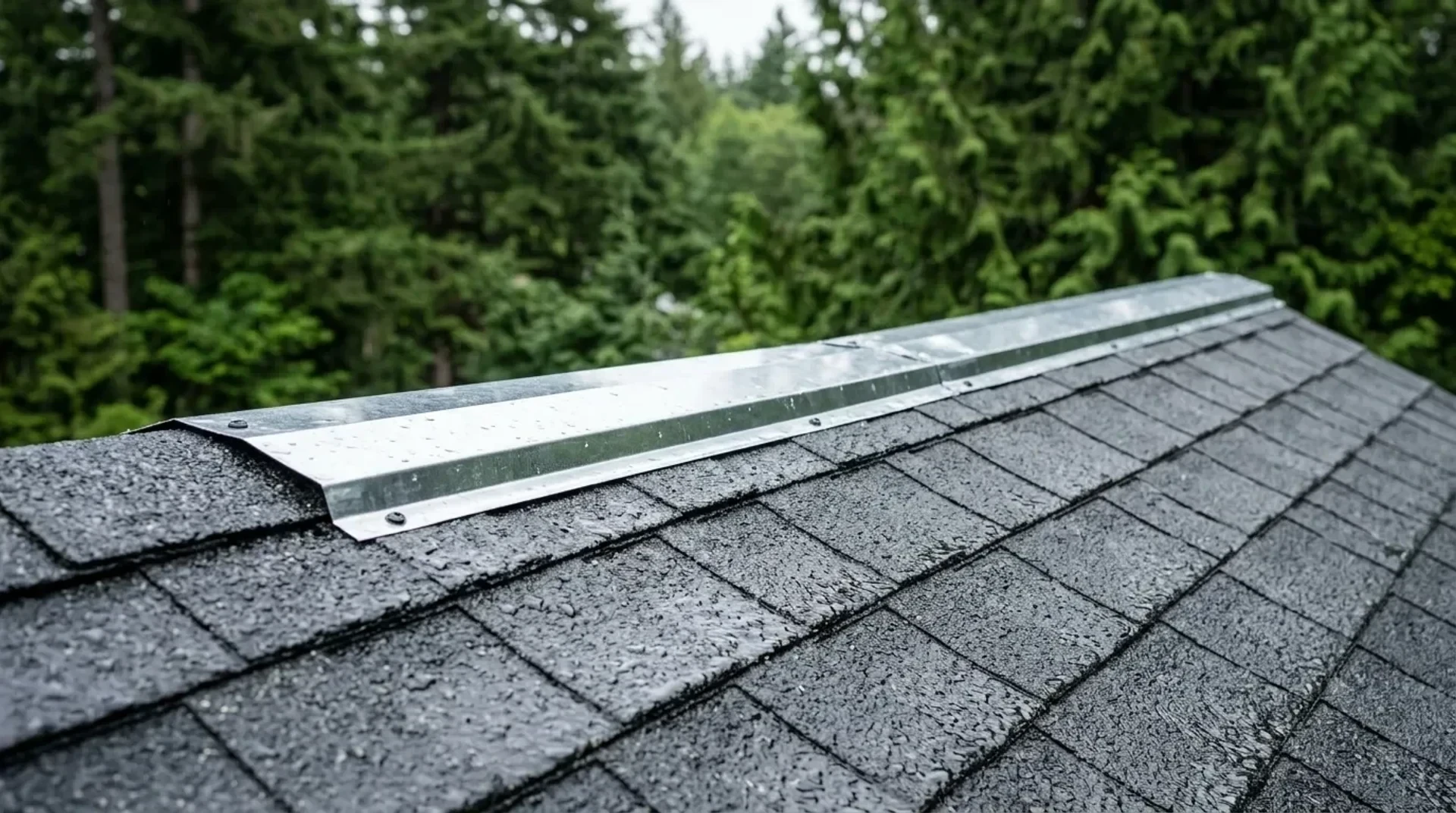
- How To Prevent Regrowth: Rain-activated zinc strips along the ridge line release trace metallic ions during storms, preventing moss spores from colonizing shingle valleys.
- Should I Pressure Wash: Never. Pressure washing strips the protective ceramic granules, breaks shingle seal strips, voids manufacturer warranties, and accelerates asphalt deck decay.
Why Does Moss Destroy Pacific Northwest Roofs?
Clark County's combination of 42 inches of annual rainfall, heavy Douglas fir and western red cedar canopy shade, and mild winter temperatures creates the ideal growing conditions for moss and algae on residential roof surfaces.
Moisture Retention
Moss acts like a sponge, holding water against shingle granules long after the rain stops. This constant moisture exposure breaks down the asphalt binder and strips away the protective ceramic-coated mineral surface far faster than normal weathering.
Shingle Tab Lifting
As moss rhizoids (root-like structures) grow beneath shingle edges, they physically pry tabs upward from the deck. These lifted edges become entry points for wind-driven rain, allowing water to reach the underlayment and decking below.
Accelerated Aging
A moss-covered roof can lose 5 to 10 years of useful life compared to a properly maintained surface. The granule loss exposes raw asphalt to UV radiation, which causes cracking and brittleness in just a few seasons.
How To Remove Roof Moss Safely with Soft Washing?
Our 4-step soft wash protocol eliminates moss growth at the spore level while keeping shingles completely safe.
Visual Assessment
We walk the roof surface to evaluate moss density, shingle condition beneath the growth, and identify any areas where root penetration has already compromised tab adhesion.
Low-Pressure Soft Wash
We never use high-pressure power washing on shingle roofs. Our gentle low-pressure application distributes EPA-approved biodegradable solutions that break down moss at the cellular level without blasting away granules.
Controlled Rinse
After the treatment solution has had time to work, we rinse the surface with controlled low-flow water, directing debris into the gutter system for clean containment and disposal.
Zinc Strip Installation
We fasten zinc strips along both sides of the ridge line. When rainwater washes over the zinc, it carries zinc ions down the roof surface, creating a natural environment that resists new moss and algae colonization for years.
Should I Pressure Wash My Roof to Remove Moss?
Direct Answer: No, you should never pressure wash asphalt shingles. High-pressure water strips away the protective mineral granule coating, forces water under shingle laps into the roof decking, and immediately voids both GAF and Malarkey manufacturer warranties.
High-pressure power washing is one of the fastest ways to destroy an asphalt shingle roof. Here is why we exclusively use low-pressure soft wash techniques:
- Granule Stripping: Pressure washing blasts away the ceramic-coated granules that protect shingles from UV degradation. Once removed, they cannot be restored.
- Water Intrusion: High-pressure jets force water underneath shingle tabs and into nail holes, causing immediate leaks that may not become visible for weeks.
- Warranty Voiding: Both Malarkey and GAF explicitly state in their warranty documentation that pressure washing voids coverage on shingle products.
According to official technical guidance from the Asphalt Roofing Manufacturers Association (ARMA) and environmental recommendations from the Washington State Department of Ecology, pressure washing damages asphalt roofing fabrics and washes toxic particulate into local storm drains.
How Often Should You Treat Your Roof for Moss in Clark County?
Direct Answer: Shaded Pacific Northwest roofs beneath Douglas fir or cedar trees require professional moss treatment every 18 to 24 months. Roofs with partial shade require maintenance every 2 to 3 years, while open sunny roofs with zinc strips require treatment every 3 to 5 years.
The ideal treatment frequency for Vancouver, Washington properties depends on specific site conditions:
Heavy Canopy Shade (Douglas Fir, Cedar)
Every 18 to 24 months. Dense shade prevents UV from naturally inhibiting growth.
Moderate Shade (Partial Tree Coverage)
Every 2 to 3 years. North-facing slopes accumulate faster than south-facing surfaces.
Open Exposure (Minimal Tree Cover)
Every 3 to 5 years with zinc strips installed. UV exposure naturally slows moss growth.
Roof Moss Removal & Prevention Methods Comparison
Evaluating shingle safety, longevity, warranty compliance, and local pricing across common moss removal techniques.
| Removal Technique | Shingle Granule Safety | Spore Protection Duration | Warranty Compliance | Installed Price Range |
|---|---|---|---|---|
| Low-Pressure Soft Wash | 100% Safe (Zero Granule Loss) | 18 to 36 Months | Approved by GAF & Malarkey | $350 - $850 |
| Zinc Ridge Strip Inoculation | 100% Safe (Passive Ion Runoff) | 3 to 5 Years Continuous | Fully Compliant | $250 - $600 |
| High-Pressure Power Wash | Severe Damage (Blasts Off Granules) | 3 to 6 Months (Spores Remain) | Voids Factory Warranty | $300 - $600 |
| Wire Brush Abrasive Scraping | High Risk (Scratches Asphalt Mat) | 6 to 12 Months | Not Recommended | $250 - $500 |
Request Your Moss Removal Quote
Describe your roof type and shade conditions, and we will provide an accurate treatment estimate.
Phone
Office
12917 NE 71st St, Vancouver, WA 98682, USA
Hours
Open 24 Hours, Monday through Sunday
Clark County Service Areas
Rapid 60-Minute Emergency Dispatch & On-Site Estimates In: