Moss is a living moisture sponge on Pacific Northwest rooftops. While small green tufts might look harmless, moss rhizoids physically root into the ceramic granule coating of asphalt shingles. As colonies expand, they hold rainwater against the asphalt binder for weeks, preventing the roof from drying out even during brief sunny intervals. During winter freeze-thaw cycles, this trapped moisture expands, lifting shingle tabs and exposing decking to rot.
The Destructive Reality of High-Pressure Washing
The single most catastrophic mistake Clark County homeowners make is hiring a pressure-washing contractor or attempting DIY blast cleaning. Asphalt shingles rely on a tightly bonded layer of ceramic granules to reflect ultraviolet radiation and provide Class A fire resistance. A pressure washer operates between 2,000 and 4,000 PSI, which instantly strips away 5 to 10 years of protective mineral granules. Both Malarkey Roofing Products and GAF explicitly state in their warranty documentation that high-pressure washing voids your material warranty.
What Should You Know About Our Gentle Low-Pressure Soft Wash Protocol?
Apex Roofers Vancouver WA strictly adheres to manufacturer engineering specifications and Clark County building codes, ensuring durable weatherproofing, energy efficiency, and long-term warranty protection for local properties.
Source and Official Standards: Work performed strictly under Washington State Department of Labor and Industries (L&I) contractor registration #APEXRV*812MB and local building code standards.
Instead of high pressure, professional roofing technicians use a gentle low-pressure soft wash system (under 60 PSI) applying EPA-approved biodegradable moss treatments. This specialized cleaning solution neutralizes moss spores and dissolves the root system at a cellular level without disturbing a single asphalt granule. Within days, the desiccated moss detaches naturally with rainfall.
Long-Term Protection: Zinc Strips vs Algae-Resistant Shingles
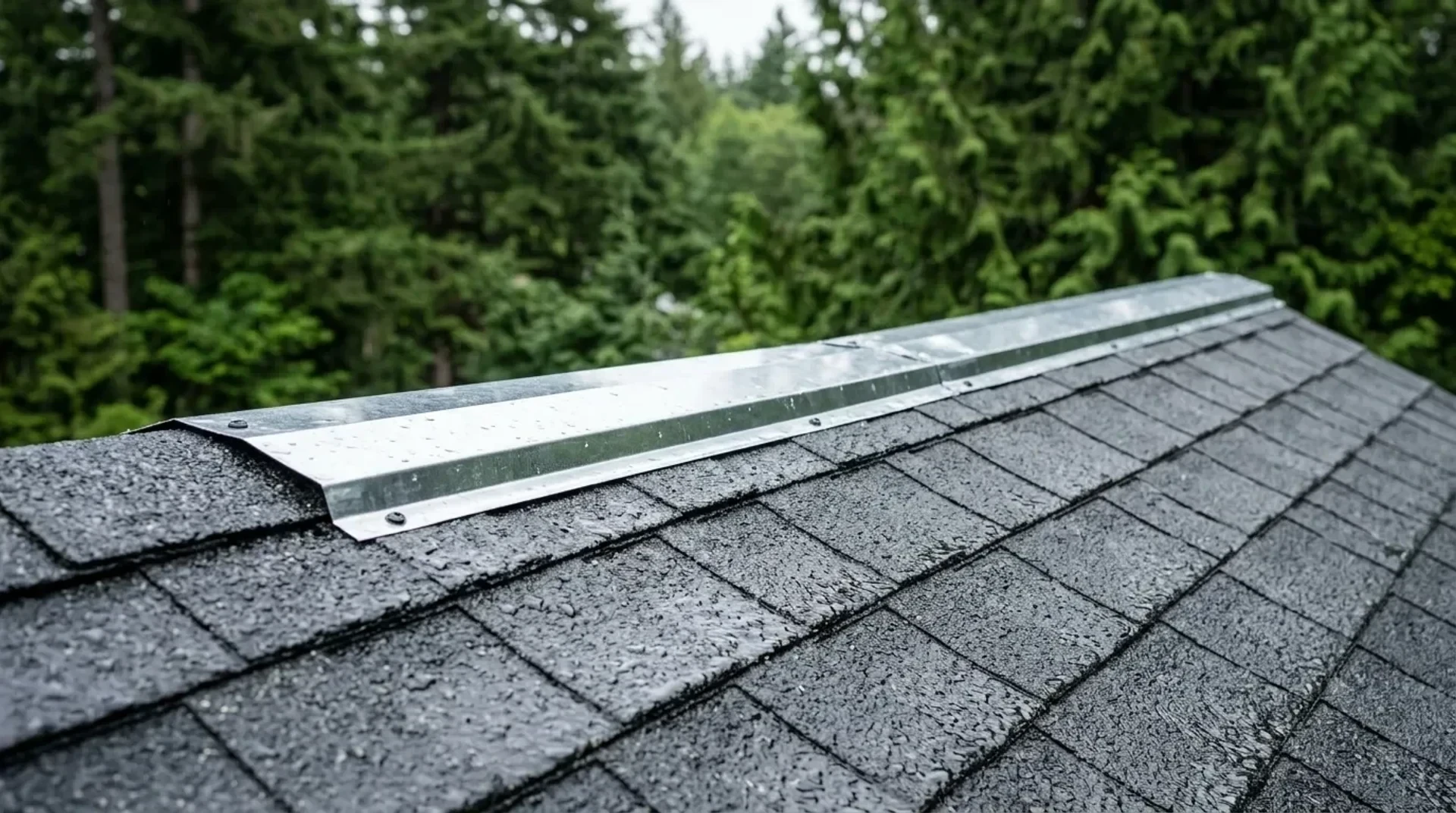
To prevent moss and algae from returning, we install 99.5% pure zinc carbonate strips along the ridge line. With each rainfall, microscopic zinc ions are released and washed down the roof plane, creating an inhospitable environment for moss and blue-green algae spores for 8 to 12 years.
If you are planning a full replacement, choosing shingles engineered for Pacific Northwest rain is essential. Malarkey Highlander NEX AR shingles incorporate Scotchgard Protector from 3M with copper granules and Flexor SBS rubberized asphalt, offering exceptional cold-weather flexibility. Meanwhile, GAF Timberline HDZ shingles feature StainGuard Plus algae protection with a 25-year manufacturer warranty. Both brands deliver superior performance when installed with proper ventilation.
Schedule a roof moss inspection every 18 to 24 months, particularly if your home is shaded by mature fir trees. Applying proactive zinc bio-treatments early prevents shingle degradation and doubles roof service life.