24/7 Emergency Response in Clark County: (360) 325-8254
Category Archive

Vancouver WA Roofing Services Guides & Best Practices

Full technical advice, material pricing benchmarks, leak diagnosis protocols, and moss prevention handbooks written by roofing specialists.

Overview & Key Takeaways
Practical roofing field guides, cost breakdown benchmarks ($7.50 to $9.50/sq ft), emergency leak isolation protocols, Pacific Northwest moss prevention treatments, and material performance comparisons for Clark County property owners.
  • Cost Transparency: Verified Clark County roof replacement costs averaging $15,000 to $28,000 with detailed square-foot formulas. .
  • Emergency Protocols: Immediate indoor leak containment, attic water path tracking, and 24/7 emergency response procedures. .
  • Material Engineering: Architectural shingle side-by-side checks (Malarkey vs GAF) and non-abrasive moss mitigation solutions. .

What Roofing Services Guides & Technical Articles Do We Publish?

We publish guides on roof tear-off costs, storm leak steps, Malarkey vs GAF shingles, and gentle moss treatments for Clark County homes.

Our guides explain full tear-off steps, shingle costs ($7.50 to $9.50/sq ft), deck repairs, and soft moss cleaning. Each guide shares clear pricing formulas and best build practices.

Technical Standards: Based on National Roofing Contractors Association (NRCA) guidelines and manufacturer specifications from Malarkey and GAF.

In Southwest Washington, roof lifespan is defined by weatherproofing performance against persistent moisture. High annual rainfall combined with dense shade speeds up organic growth and moss buildup along shingle keyways. Our roofing specialists recommend semi-annual gutter clearance, scheduled flashing checks at plumbing openings and chimneys, and low-pressure eco-safe treatments every 18 to 24 months to maximize the 30 to 50 year lifespan of your architectural laminate system.

Explore technical guides, cost breakdowns, and shingle lifespan analyses from certified local roofers.
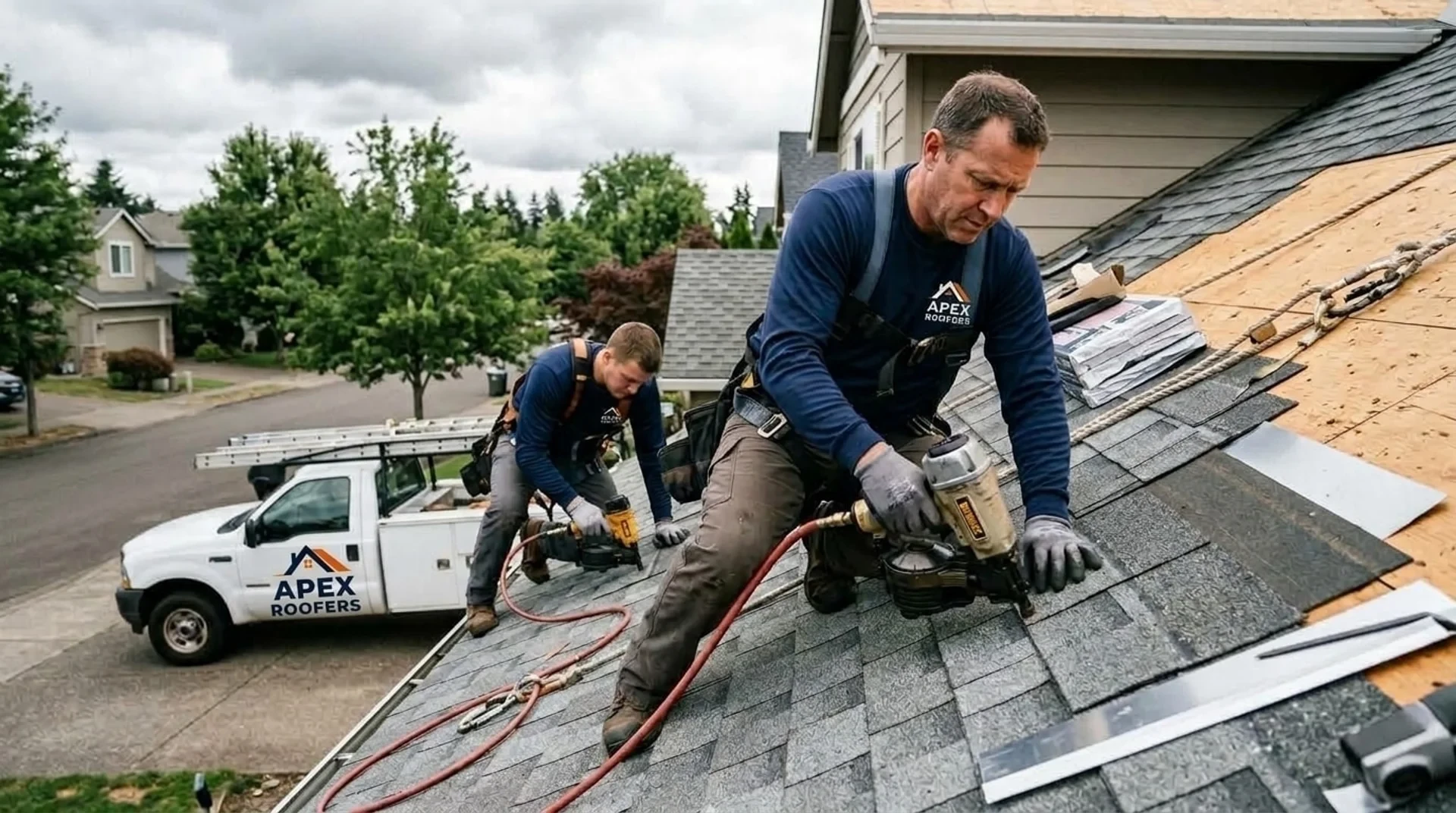
Professional roofing crew installing architectural shingles during complete roof replacement in Vancouver WA Roof Replacement
Cost Guide • 8 Min Read • Roof Replacement.

Roof Replacement Cost in Vancouver WA: Complete Material, Decking & Labor Price Guide

See Clark County roof costs. Full tear-off runs $7.50 to $9.50 per square foot. Average jobs cost $15,000 to $28,000 with architectural shingles.
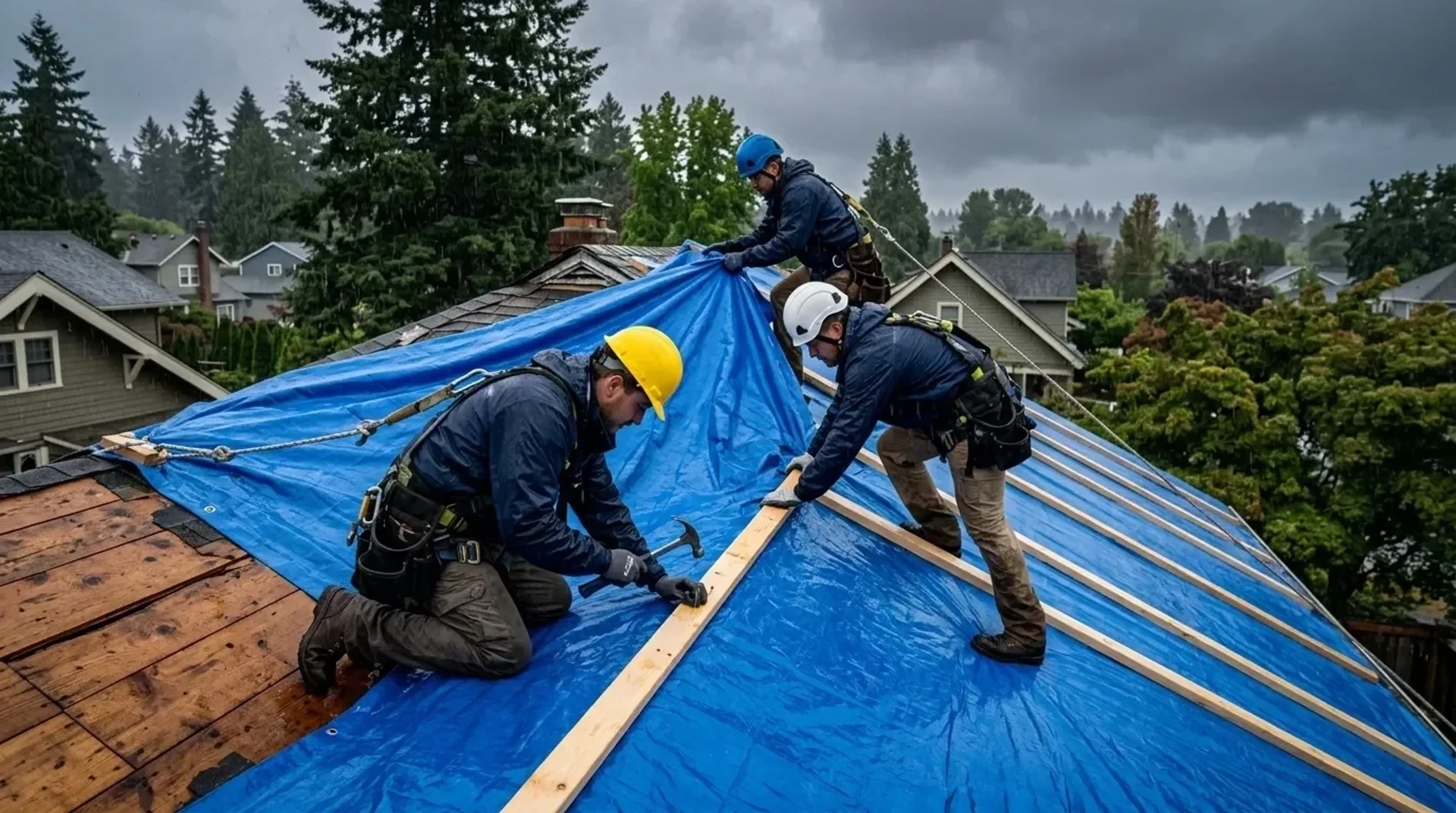
Emergency roof repair crew installing heavy-duty waterproof tarp with lumber nailers on leaking Vancouver home Emergency Repair
Emergency Guide • 5 Min Read • Emergency Repair.

Emergency Roof Leak Repair in Vancouver WA: Rapid Tarping Protocol & Storm Insurance Documentation

Learn fast steps for active storm leaks. Relieve drywall water bulges, cut power, place lumber batten tarps, and file insurance claim papers.
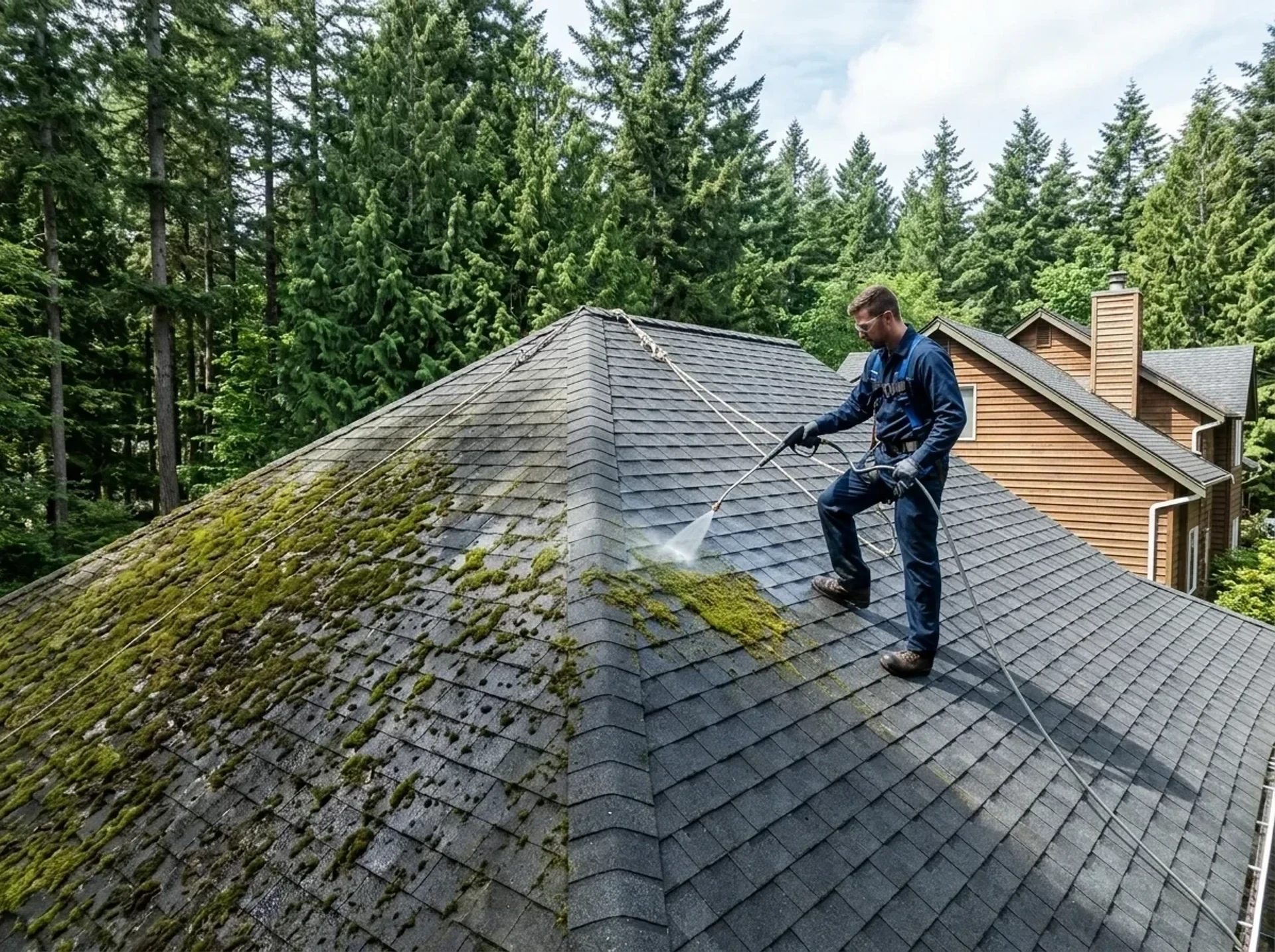
Gentle low-pressure soft wash roof moss treatment and zinc strip install on Clark County home Moss Treatment
Maintenance Guide • 7 Min Read • Moss Treatment.

Pacific Northwest Roof Moss Removal: Gentle Bio-Treatments vs Pressure

Learn safe moss care in the Northwest. High-pressure water harms shingle grit. Soft eco-washes kill moss roots safely. Zinc strips stop moss regrowth.
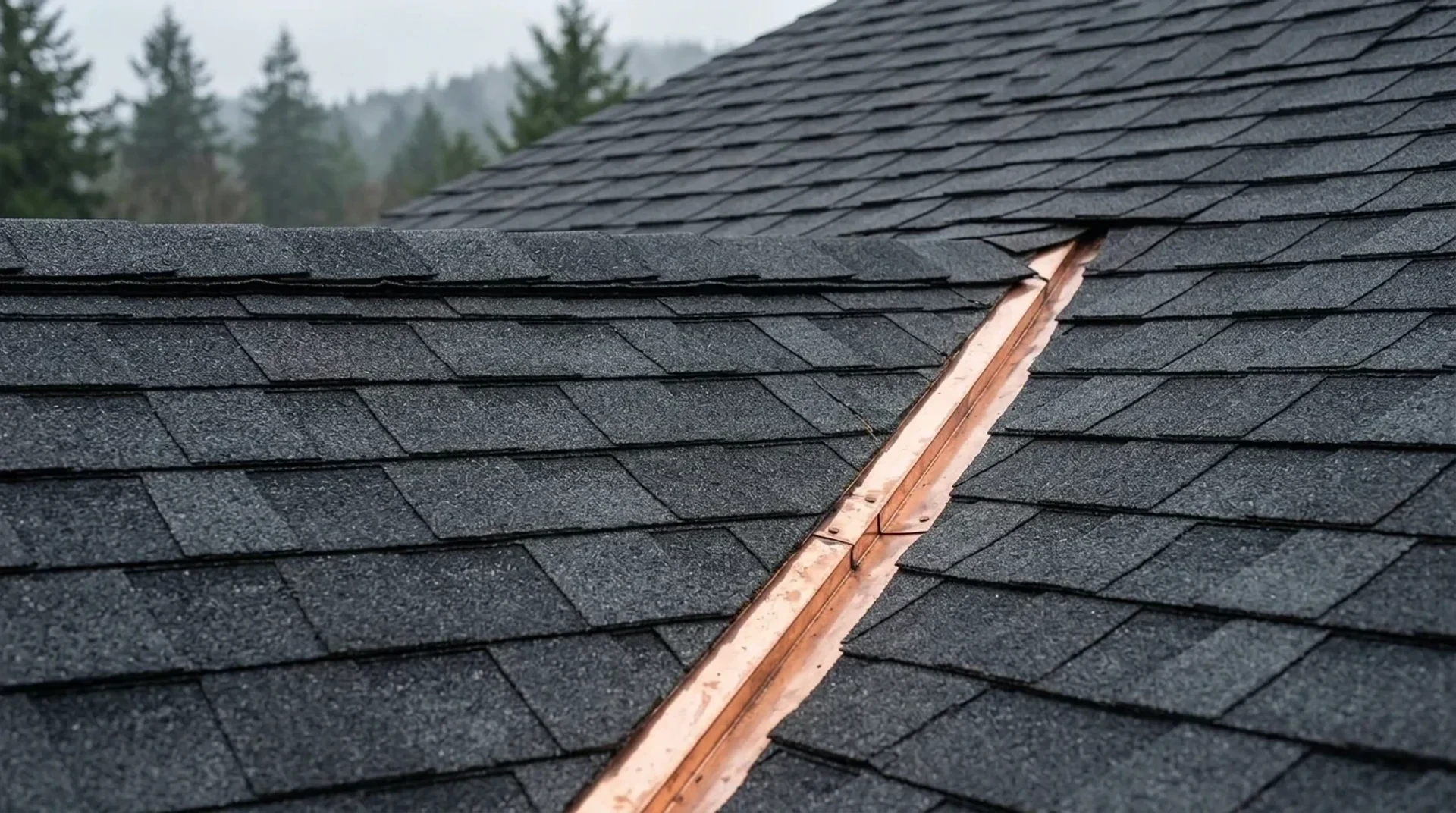
Side-by-side engineering comparison between Malarkey Highlander and GAF Timberline HDZ architectural laminate shingles Shingle Comparison
Comparison Guide • 7 Min Read • Shingle Comparison.

Malarkey vs GAF Architectural Shingles: Pacific Northwest Lifespan, Wind Ratings & Coverage Comparison

Compare Malarkey Highlander NEX and GAF Timberline HDZ shingles. Learn about rubberized asphalt, 130 MPH wind hold, and algae defense for Clark County.

How Do Core Roofing Services Compare in Clark County?

Local roof services range from fast leak fixes ($350 to $1,850) for pipe boots, to full reroofs ($7.50 to $9.50/sq ft) that last 30 to 50 years.

Roofing Service Category Clark County Cost Benchmark Primary Failure Symptoms Weather Defense Advantage
Architectural Roof Replacement. $7.50 to $9.50 / sq ft. Curling shingles, severe granule loss, age >20 yrs. 130 MPH wind resistance, ice barrier at eaves.
Targeted Roof Leak Repair. $350 to $1,850 per repair. Pipe boot split, chimney flashing gap, isolated drip. High-grade elastomeric sealant & metal step flashings.
Gentle roof moss Mitigation. $450 to $950 per treatment. Green moss cushions, shingle edge lifting. EPA algaecide soft-wash with zero granule erosion.
Commercial TPO Flat Membrane. $8.50 to $11.00 / sq ft. Ponding water, seam separation, puncture holes. Heat-welded monolithic seams, reflective white surface.

What Are Frequently Asked Questions About Vancouver WA Roofing Services?

Homeowners ask how to find roof costs ($7.50 to $9.50/sq ft) and how to check state licenses through Washington Labor & Industries.

Class A fire-rated architectural laminate shingles (such as Malarkey Highlander NEX AR or GAF Timberline HDZ) provide the best balance of cost and lifespan, running $7.50 to $9.50 per square foot installed with a 30 to 50 year lifespan.
If damage is confined to a single pipe boot, flashing seal, or small wind-creased shingle area on a roof under 15 years old, repair is recommended. If shingles are curling, granule loss exposes fiberglass, or active leaks occur across multiple slopes, a complete tear-off is more cost-effective.
Our rapid response team provides prompt emergency assistance throughout Vancouver, Camas, Washougal, Ridgefield, and Battle Ground with heavy-duty 2x4 lumber secured storm tarps.

Educational Guides Bureau

Track municipal building code adjustments, regional storm season alerts, and Southwest Washington roofing standards.

How Do You Request an On-Site Roofing Check?

You can request an on-site check by calling our Vancouver team at (360) 325-8254 or submitting your property details online for a full 21-point roof diagnostic.

Whether planning a complete architectural shingle tear-off, metal install, or emergency leak fix, our Clark County craftsmen provide full itemized project bids.

Field Guides Help Desk

Apex Roofers Vancouver WA.

Technical Education Center

(360) 325-8254

Advisory Availability

12917 NE 71st St, Vancouver, WA 98682, USA.

Technical Advisory Hours

Roofing specialists on call around the clock seven days weekly.

How Does Pacific Northwest Weather Affect Roofing Engineering & Lifespan?

Clark County gets 42 inches of rain each year and high Gorge wind gusts. Roofs need ice shield at eaves, synthetic base felt, and 6 nails per shingle to stop blow-offs.

Comparing architectural laminate compositions, rubberized asphalt polymers, and algae defense technologies.

SBS Modified Rubberized Asphalt

Rubberized asphalt stays flexible during cold winters. Unlike standard asphalt that can crack in freezes, rubberized shingles bend with the cold and resist hail impacts.

Scotchgard Copper Granule Distribution

Algae causes dark streaks on north roof slopes. Quality shingles use copper ceramic granules. When wet, they release ions that stop algae stains.

Concealed Fastener Standing Seam Metal

Standing Seam Metal Roofs last 50 years. Panels use hidden clips without exposed screws. The metal expands and contracts smoothly without causing leaks.

How Do You Compare Roofing Estimates & Contractor Bids in Clark County?

Compare bids by checking WA L&I licenses. Confirm full tear-off to bare wood. Check factory credentials like Malarkey and GAF. Ensure full itemized price lists.

When checking roof bids, confirm full tear-off to bare wood sheathing. Check for ice shield in valleys and synthetic base felt. Cheap bids often cut corners by nailing over old shingles.

Verify your roofer holds an active WA L&I license and worker insurance. Factory credentials ensure strong material coverage and protect your home.

All technical checks feature high-resolution aerial drone photography and digital surface moisture scans. We deliver full condition reports to assist property owners in determining accurate repair versus full replacement timelines. Homeowners receive transparent, itemized bids outlining all labor, materials, waste disposal, and manufacturer coverage options before any work commences.

Comparing Roofing Systems Built for the Pacific Northwest

An authoritative guide to asphalt shingles, standing seam metal, flat membrane systems, and moss prevention strategies designed specifically for Clark County weather patterns.

Polymer-Modified Asphalt vs. Standard Fiberglass

Standard asphalt shingles utilize oxidized asphalt that becomes brittle when exposed to prolonged freeze-thaw cycles and winter moisture. In contrast, polymer-modified asphalt formulations (such as Malarkey Nexgen rubberized asphalt) incorporate virgin polymers and recycled rubber to enhance pliability, tear strength, and impact resistance.

Class 4 impact-rated architectural shingles demonstrate superior resistance against hail and fallen tree debris commonly encountered during winter windstorms in Vancouver, Camas, and Battle Ground. The rubberized molecular matrix maintains exceptional flexibility down to sub-freezing temperatures, preventing stress cracks around mechanical fastener heads.

Standing Seam Metal Roofing for Forested Properties

Homeowners in heavily wooded neighborhoods such as Felida, Salmon Creek, and Brush Prairie face constant pine needle, cedar foliage, and deciduous leaf drop. Heavy organic debris retains moisture and promotes aggressive moss colonization on porous shingle granules.

Standing seam 24-gauge or 26-gauge steel roofing systems feature concealed clip fasteners and smooth Kynar 500 factory finishes. Because metal panels are non-porous and naturally shed pine needles and organic matter during rainfall, moss and lichen cannot embed root structures into the roof deck, delivering reliable service life exceeding 50 years.

Commercial Low-Slope & Flat Roof Solutions

Flat commercial roofs in the Pacific Northwest must contend with heavy seasonal precipitation and standing water near internal drainage basins. Thermoplastic Polyolefin (TPO) and Polyvinyl Chloride (PVC) membranes feature hot-air welded seams that form a permanent physical fuse stronger than the membrane itself.

Mechanically fastened or fully adhered 60-mil single-ply systems resist standing water, ultraviolet radiation degradation, and chemical exhaust from rooftop HVAC units. Properly engineered crickets and tapered polyiso insulation direct ponding water efficiently toward scuppers and downspouts, preventing premature structural sag.

Key Indicators It Is Time for a Roof Replacement

Knowing when to transition from recurring localized repairs to an investment in complete tear-off reroofing saves homeowners thousands of dollars in hidden dry rot remediation. Watch for these definitive signals during routine seasonal inspections:

  • Widespread Shingle Granule Depletion: Piles of colored mineral granules accumulating in gutter troughs indicate that the protective asphalt substrate is now exposed to degrading ultraviolet radiation.
  • Persistent Ceiling & Attic Moisture Infiltration: Recurring water marks, musty smells in the upper floor, or damp fiberglass insulation batts point to widespread flashing breakdown or decayed underlayment.
  • Soft or Sagging Decking Between Rafters: Spongy roof decking underfoot during foot traffic signals rotted OSB or plywood sheathing requiring full replacement down to the framing.
  • Curled, Cupped, or Wind-Lifted Shingles: Shingle edges curling upward or missing entire tabs after winter storms show adhesive seal failure across large roof planes.
  • Roof Age Exceeding 20 to 25 Years: Standard architectural shingles installed in the early 2000s have reached the conclusion of their effective waterproof design lifecycle in the Pacific Northwest.

To discuss your roof condition with certified local professionals or schedule an on-site structural evaluation, contact Apex Roofers Vancouver WA today at (360) 325-8254.

Call Now Estimate