24/7 Emergency Response in Clark County: (360) 325-8254
Category Archive

Vancouver WA Roofing Local News & Clark County Alerts

Covering Clark County roofing, permitting, and weather updates, plus illustrative replacement pricing examples.

Timely municipal building code changes, National Weather Service alerts, and neighborhood roofing updates for Clark County, Washington.

Overview & Key Takeaways
Stay informed with Vancouver WA building code changes, Clark County permitting updates, Columbia River Gorge wind storm advisories, and local homeowner guides from licensed roofing professionals.
  • Building Code Compliance: current City of Vancouver and Clark County residential roofing code updates and permit thresholds. .
  • Storm & Wind Readiness: Columbia River Gorge storm season advisories, wind shear mitigation, and 24/7 emergency response. .
  • Local Authority: Verified by Washington State L&I registered roofing contractors . .

Local News & Building Code Updates for Clark County Owners

Local news covers City of Vancouver roof codes, permit rules for jobs over 100 sq ft, and winter Gorge wind alerts across Clark County.

Vancouver requires roofing permits for full reroofs. Codes require ice shield at eaves and 1:150 attic airflow. Our news briefs track city codes and storm warnings.

Building rule Verification: Tracked via City of Vancouver Community Development building codes and National Weather Service Portland wind advisories.

Clark County gets heavy winter storms and Gorge wind gusts of 60 to 75 MPH. Learn local permit rules, WA L&I work rules, and proper attic vents. Good vents stop ice dams and save roof wood.

Stay informed with Clark County roofing regulations, municipal building code updates, and storm season news.
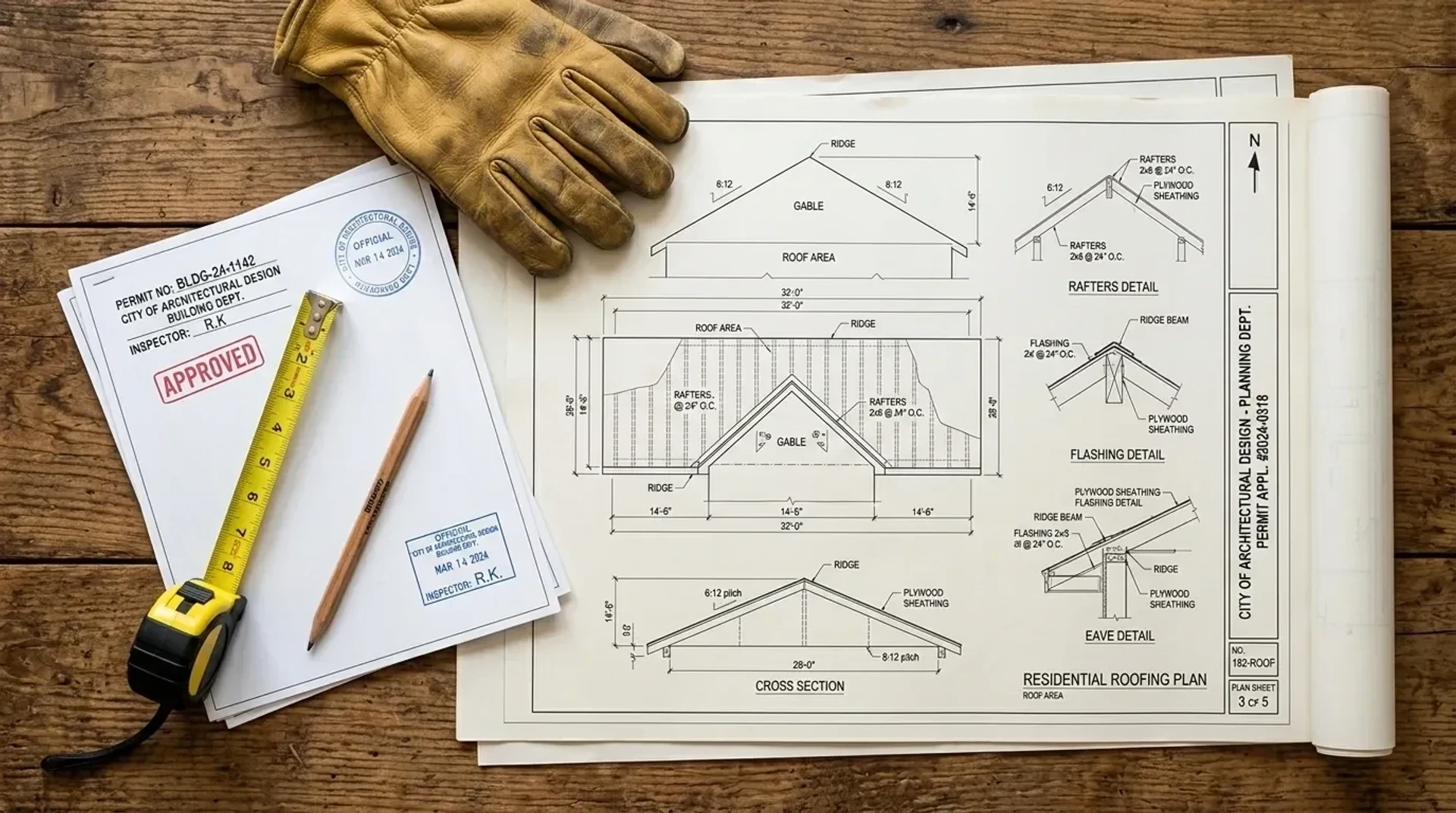
City of Vancouver building permit and roofing code compliance documents in Vancouver WA Municipal Code
Field Guide • 6 Min Read • Municipal Code.

City of Vancouver Building Code Update: What Local Property Owners Must Know About New Residential Roofing Standards

See City of Vancouver roof rules. Learn attic vent ratios, ice shield rules along eaves, and permit steps for home tear-offs.
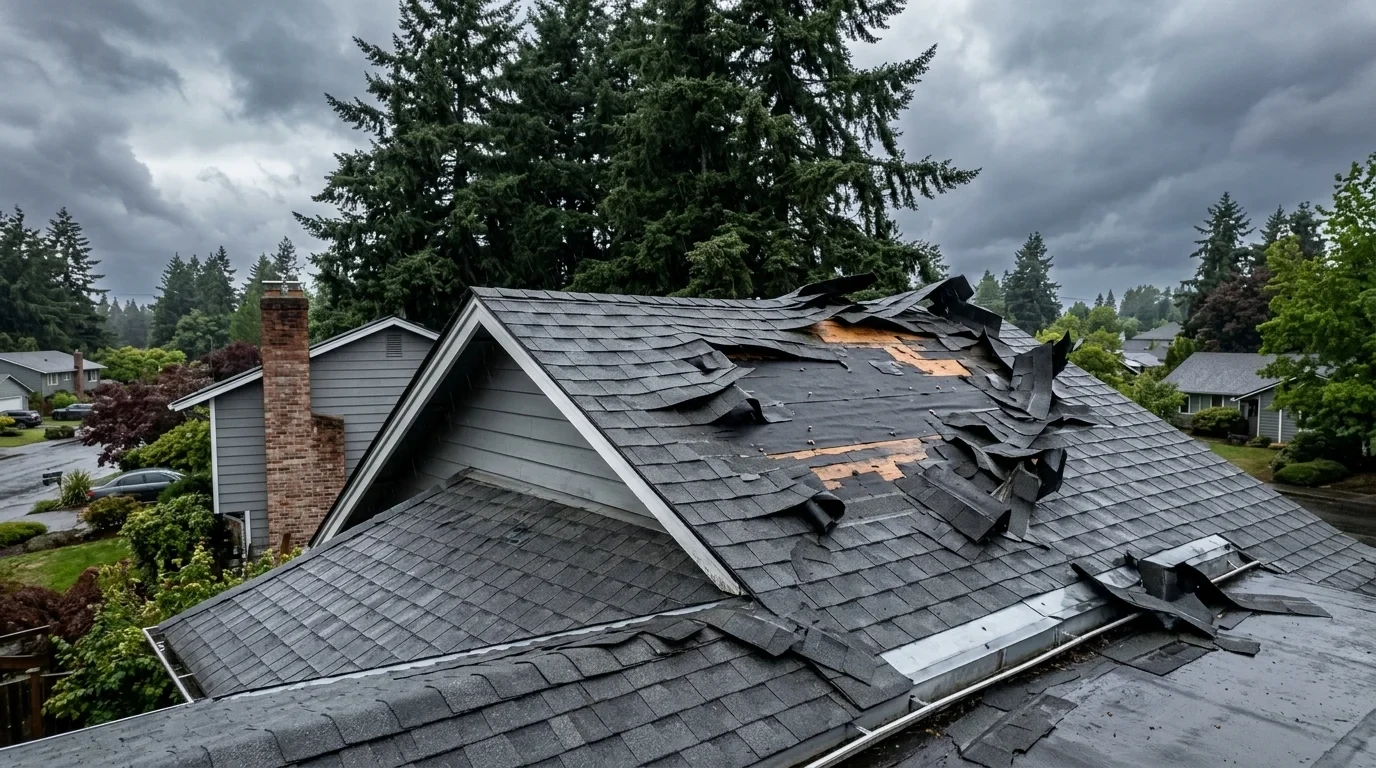
Severe Columbia River Gorge storm wind roof damage and emergency preparation in Southwest Washington Gorge Wind Alert
Field Guide • 6 Min Read • Gorge Wind Alert.

Columbia River Gorge High-Wind Warning: How Vancouver & Camas Homeowners Are Preparing Roofs for 65 MPH Gusts

Get Columbia Gorge wind alerts. Learn roof prep tips, 6-nail shingle patterns, and fast tarp steps against 65 MPH wind gusts.

How Do Clark County Municipal Roofing Codes Compare?

Clark County requires permits for roof tear-offs over 100 sq ft. Roofs near the Gorge must use high-wind 6-nail shingle patterns.

Clark County area Permit Threshold High-Wind Fastening Rule Columbia Gorge Exposure Level
City of Vancouver (98682, 98684, 98661). Required for structural reroofs >100 sq ft. 6-nail architectural pattern mandatory. Moderate to High (50-70 MPH Gusts).
City of Camas (98607). Required for all structural tear-offs. 130 MPH rated shingles with starter lock. Severe Gorge Wind Shear (70-90 MPH Gusts).
City of Washougal (98671). Required with framing & ventilation signoff. Enhanced starter & rake flashing ties. Extreme Gorge Wind Corridor (80-100 MPH Gusts).
Unincorporated Clark County. Clark County Community Development permit. IRC Chapter 9 high-wind nailing standard. Variable depending on elevation and tree canopy.

What Are Common Questions About Vancouver WA Roofing News & Codes?

Homeowners ask when Gorge winds peak (October to March), how to pull city permits online, and what codes say about attic vents.

Yes. The City of Vancouver enforces municipal Community Development codes with specific continuous ridge ventilation and ice barrier requirements, while unincorporated Clark County follows county-level building safety guidelines. Our team manages municipal permit filings across all local areas.
High Wind Warnings are common from November through March, funneling sustained winds of 35 to 45 MPH with localized gusts reaching 65 MPH across Camas, Washougal, Prune Hill, and East Vancouver.
Homeowners can verify active contractor status, bonding, and workers compensation coverage through the Washington State Department of Labor & Industries (L&I) portal using the contractor's business name or registration number.

Regional News Editorial Team

Review technical service guides, material longevity comparisons, and residential pricing formulas.

How Do You Connect with Our Vancouver Permit & Storm Team?

Connect with our storm response and permit team by calling (360) 325-8254 or visiting our operations center at 12917 NE 71st St, Vancouver, WA 98682 for immediate project assistance.

Have questions regarding City of Vancouver roofing permits, historic district guidelines, or seasonal windstorm damage assessments? Speak directly with our licensed Clark County specialists.

Newsroom Telephone Line

Apex Roofers Vancouver WA.

Regional News Bureau

(360) 325-8254

Editorial Office Schedule

12917 NE 71st St, Vancouver, WA 98682, USA.

Publishing & Intake Hours

Active desk available 24 hours daily, Monday to Sunday.

How Do Pacific Northwest Weather Briefings Inform Roof Defense Strategies?

Real-time weather briefings track Columbia Gorge wind shear and heavy rain river events, allowing our crews to mobilize preventative roof tarping, storm leak assessments, and emergency weatherproofing.

Understanding seasonal rain volume, freezing gorge winds, and summer UV degradation across Southwest Washington.

Columbia River Gorge Winter Gusts

Winter storms bring east winds over 65 MPH to Camas, Washougal, and East Vancouver. We use 6-nail patterns and sealed edges to stop wind tear-offs.

Atmospheric River Downpour Protection

Clark County gets 42 to 48 inches of rain yearly. Rain tests chimney and skylight flashing. We install open metal valleys and lead pipe boots to shed water fast.

Evergreen Needle Canopy Debris Management

Douglas firs drop tree needles on roofs each fall. Needles hold water and make moss grow. We design clean roof lines so rain washes needles away.

How Do You Navigate Clark County Building Departments & Permit Mandates?

City roof permits involve basic roof plans, following IRC Chapter 9, and booking city roof deck checks before new shingles go on.

Getting roof permits can feel hard for homeowners. The City of Vancouver or Clark County handles permits based on where your home sits.

Our team pulls all city permits for you. We file paper forms and book city inspections. We make sure your new roof passes every test.

Seasonal Emergency Tarping & Roof Securing Procedures

When wind blows off shingles or branches fall, quick action stops leaks. Our team installs tough storm tarps. We screw 2x4 wood strips into rafters to hold tight.

Our storm tarps keep rain off home ceilings and insulation. We write damage paperwork for your insurance adjuster. We send clear photos to speed up your claim. We work with city staff to pull permits fast.

Understanding Clark County Roofing Codes & Wind Standards

A comprehensive breakdown of municipal roofing compliance, severe storm preparation, and structural roof ventilation guidelines across Vancouver, Camas, Washougal, and northern Clark County.

City of Vancouver Reroof Permitting Mandates

The City of Vancouver Community and Economic Development Department enforces specific structural regulations regarding residential roof replacements. In Clark County, Washington building code dictates that when more than 25 percent of a roof covering is removed or replaced, the entire installation must adhere strictly to current energy and building code standards.

A critical consideration for property owners is the weight limit enforced on existing trusses and rafters. City codes generally permit a maximum of two layers of asphalt shingles before a mandatory complete tear-off down to structural plywood decking is required. However, our experienced craftsmen always advise a 100 percent tear-off regardless of layer count because hidden decking rot from past moisture intrusion cannot be detected through overlying shingle layers.

Columbia River Gorge High-Wind Load Requirements

Residential properties located in East Vancouver, Prune Hill in Camas, and downwind along the Columbia River Gorge regularly experience severe winter wind shear events reaching sustained gusts between 60 and 85 miles per hour. Standard four-nail shingle application patterns are insufficient under these rigorous atmospheric conditions.

Washington building officials mandate enhanced six-nail fastening schedules along with starter strip adhesive bonds along all rakes and eaves. Class F and Class H wind-resistant shingles, tested in accordance with ASTM D3161 and ASTM D7158 standards, ensure that shingle tabs remain mechanically locked in place, preventing edge uplift, shingle creasing, and premature fastener pull-through during intense winter storms.

<<<<<<< HEAD

Attic Ventilation & Moisture Equalization Ratios

The Pacific Northwest climate delivers more than 42 inches of annual rainfall across Clark County. Unbalanced attic ventilation traps humid interior air beneath cold roof sheathing, leading to mold blooms, structural truss degradation, and early shingle granule loss. Local codes mandate a minimum 1:300 net ventilating airflow ratio, balanced equally between intake and exhaust.

Continuous ridge vents installed along peaks combined with unobstructed soffit intake vents create a natural convection chimney effect. This continuous air exchange lowers summer attic heat levels, preserves interior conditioned comfort, and actively flushes out winter attic dampness without relying on costly mechanical power ventilators.

=======

Attic Ventilation & Moisture Equalization Ratios

The Pacific Northwest climate delivers more than 42 inches of annual rainfall across Clark County. Unbalanced attic ventilation traps humid interior air beneath cold roof sheathing, leading to mold blooms, structural truss degradation, and early shingle granule loss. Local codes mandate a minimum 1:300 net free ventilating area ratio, balanced equally between intake and exhaust.

Continuous ridge vents installed along peaks combined with unobstructed soffit intake vents create a natural convection chimney effect. This continuous air exchange lowers summer attic heat levels, preserves interior conditioned comfort, and actively flushes out winter attic dampness without relying on costly mechanical power ventilators.

>>>>>>> parent of bf5ce067 (fix(seo-cwv): optimize core web vitals, ai search health, aria labels, and clean temporary assets)

Step-by-Step Guide: Filing a Storm Damage Claim in Clark County

When high-velocity windstorms or fallen evergreen branches cause sudden puncture damage to your roof, immediate and methodical action is necessary to protect your home structure and streamline insurance compensation. Follow these contractor-recommended protocols:

  1. Prioritize Ground-Level Safety: Avoid climbing onto a wet or compromised roof deck. Document visible damage from the perimeter ground using high-resolution photos and video footage.
  2. Emergency Leak Stabilization: Contact licensed local roofers immediately to position durable synthetic tarps securely with wooden furring strips to prevent secondary ceiling drywall collapse.
  3. Notify Your Insurance Adjuster Promptly: Open a formal insurance claim file and furnish precise storm date and meteorological wind-speed records from local Vancouver weather stations.
  4. Obtain an Itemized Contractor Assessment: Request a detailed, photo-documented 21-point structural condition assessment that specifies square footage, decking requirements, flashing repairs, and shingle waste factors.
  5. Coordinate Adjuster Walkthrough: Ensure your trusted roofing specialist meets the field insurance adjuster on-site to inspect chimney flashings, valley liners, and collateral gutter impacts together.

For immediate emergency assistance or to arrange an on-site structural evaluation with our Clark County roofing specialists, call (360) 325-8254 at any hour.

Call Now Estimate