When severe Pacific Northwest rainstorms or fallen tree limbs compromise your roof, water intrusion accelerates quickly. In Clark County, where annual rainfall exceeds 42 inches, an unaddressed leak can ruin attic insulation, short out electrical circuits, and saturate drywall ceilings within hours. Here is the field-tested protocol our emergency response team follows across Vancouver, Camas, and Ridgefield.
Immediate Action in the First 60 Minutes:
1. Relieve Water Pressure on Ceilings: If you see a sagging ceiling bulge or water blister forming beneath the drywall paint, place a large 5-gallon bucket underneath and carefully puncture the center of the blister with a screwdriver. This allows water to drain into the bucket and prevents the entire drywall ceiling panel from collapsing under trapped weight.
2. Cut Power to Wet Fixtures: If water is dripping near recessed lights, ceiling fans, or wall outlets, immediately turn off the corresponding circuit breakers at your main panel to prevent electrical fires or shock hazards.
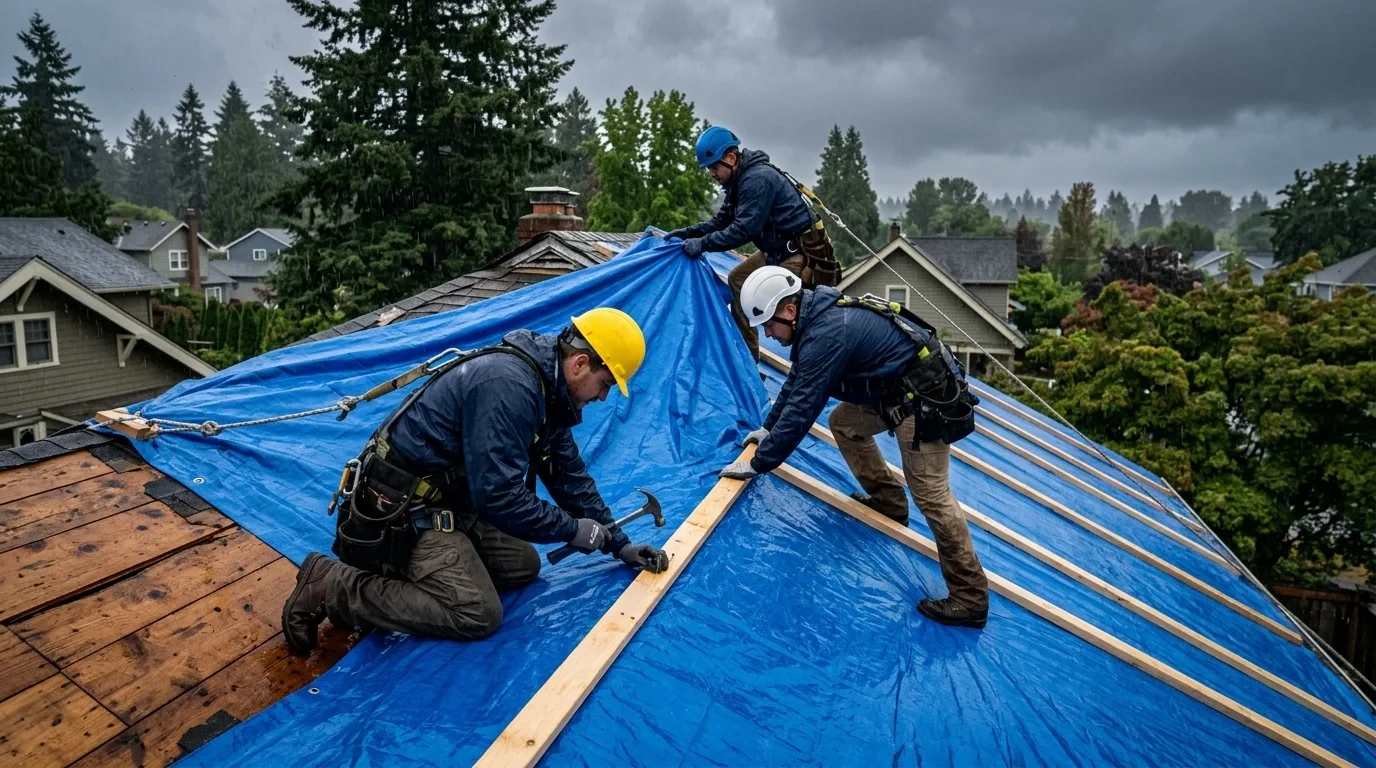
3. Why Professional 2x4 Batten Tarping Is Critical: Quick DIY blue tarps weighed down with bricks or sandbags almost always fail in high winds. The wind catches the tarp edges, sends bricks crashing into gutters or parked vehicles, and allows water to funnel underneath. Our crew uses industrial woven polyethylene tarps mechanically secured to structural rafters with 2x4 lumber nailer battens, creating a watertight envelope that withstands 60 MPH winds until permanent repairs can be completed.
4. Documenting Proof for Adjuster Approval: We take timestamped wide-angle and macro photos of exterior roof puncture points, broken decking, and interior water lines before temporary dry-in begins, giving your insurance company clear evidence to approve your storm damage claim.